
 EN



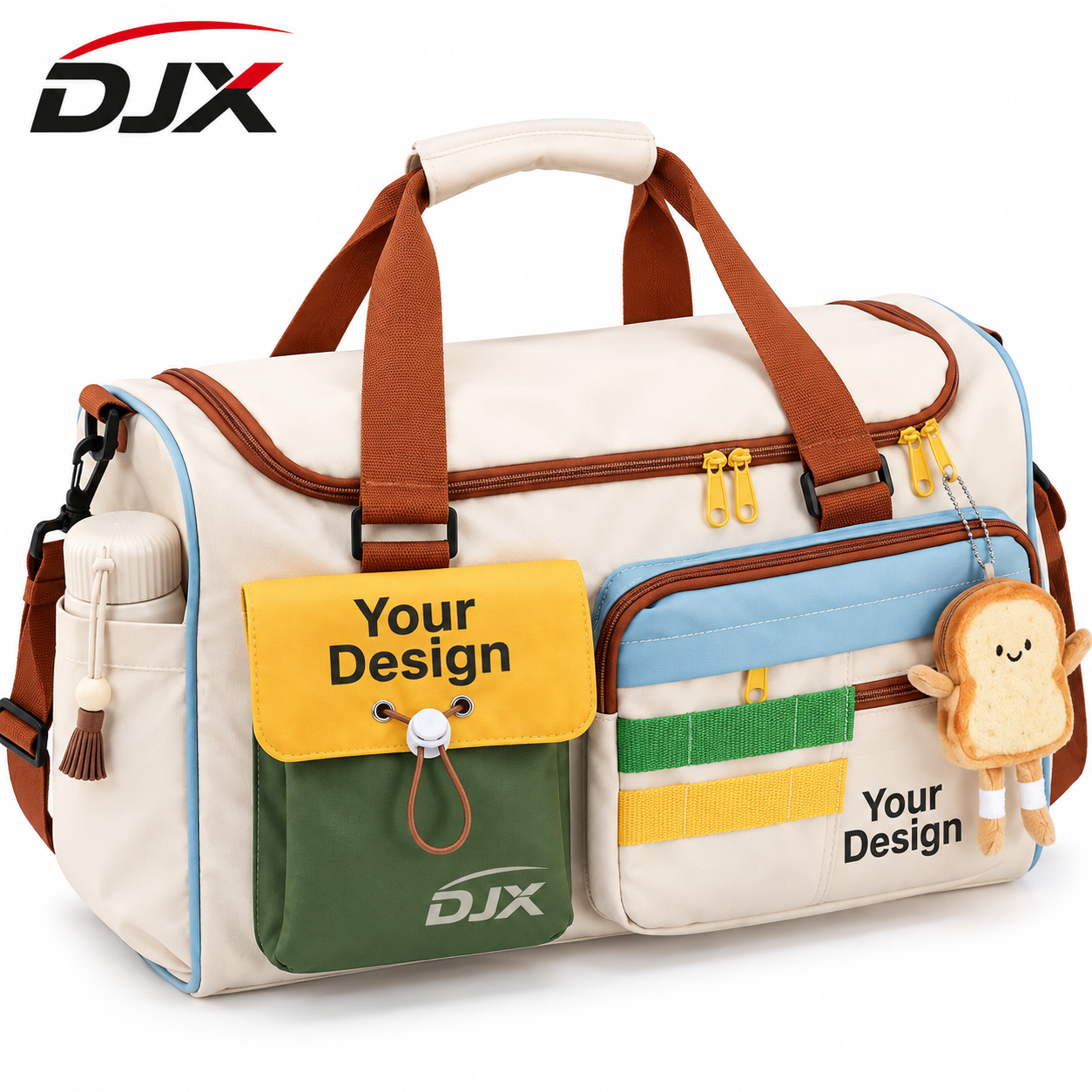
Guangdong Province: The Premier Hub for Travel Bag Custom Manufacturing in China
Guangdong Province is the strongest starting point for brands that need a travel bag custom China factory because it combines dense materials access, skilled labor, and export-ready logistics. China produces 78% of global handbags, backpacks, and luggage (China Leather Industry Association 2026), and Guangdong anchors much of that output in premium and mid-to-high-end categories. Buyers can move from design file to production sample faster here than in most other provinces—especially for leather, PU, nylon, and hybrid travel bag lines.
Shiling Town (Guangzhou): End-to-End Customization — From Design to Delivery
Shiling Town in Guangzhou’s Huadu District is among the world’s most concentrated leather goods clusters. It produces over 70% of China’s leather and PU bags, with more than 8,000 factories and around 200,000 workers (China Leather Industry Association 2026). That density shortens the path from concept to carton. A typical project includes design-for-manufacturing review, pattern making, material selection, prototyping, cutting, stitching, edge painting, logo debossing or embroidery, hardware attachment, quality inspection, and export packaging. First samples often arrive within 7 to 14 days; bulk production begins after approval.
The cluster excels at soft-sided travel bags—weekenders, duffels, and carry-ons—using PU, nylon, coated canvas, or lightweight leather. Raw material suppliers, zipper vendors, and hardware factories operate within a short radius, enabling rapid sourcing adjustments. Many workshops support custom lining, interior organization pockets, and branded dust bags. Minimum order quantities are often flexible at mid-size factories, starting in the low hundreds for stock materials. Still, not every workshop meets export standards—so factory audits, clear specification sheets, and pre-production samples remain essential before confirming an order.
Shenzhen & Dongguan: High-Fidelity OEM/ODM for Premium Travel Bag Custom Orders
Shenzhen and Dongguan serve a different segment: travel bag custom programs demanding tight tolerances, premium hardware, and repeatable OEM or ODM execution. Factories here maintain cleaner assembly environments, digital pattern systems, and formal QC protocols. They’re well suited to rigid-frame suitcases, hybrid carry-ons, business travel cases, and tech-integrated backpacks.
Logo precision and color matching are managed through standardized color reference systems and pre-production approval samples. Many suppliers use AQL-based inspection standards and retain traceability records for shells, linings, zippers, and wheels—supporting consistent branding across multi-batch orders. This discipline enhances export compliance but typically comes with higher tooling fees and longer sample timelines than Shiling. Reserve this cluster for high-retail-price or high-volume product lines—not basic promotional bags. Factory visits should verify clean assembly areas, torque testing for handles and hinges, and retention of material certificates.
Fujian Province: Technical Excellence in Durable & Outdoor-Focused Travel Bag Custom Production
For brands seeking a travel bag custom China factory with genuine material engineering capability, Fujian’s Xiamen–Quanzhou corridor stands out.
Xiamen & Quanzhou: Mastery in Waterproof Materials, Frame Backpacks, and Trolley Integration
These factories specialize in TPU welding, high-frequency seam sealing, and reinforced chassis construction for outdoor and hybrid luggage. Xiamen suppliers focus on waterproof roll-top duffels and technical backpacks using 500D–1000D nylon or recycled polyester. Quanzhou adds strength in frame-backpack and trolley integration—combining aluminum or composite internal frames with smooth wheel systems.
Many facilities maintain AQL 2.5 inspection protocols and document hydrostatic head ratings above 10,000 mm for coated fabrics. Custom sample lead times typically run 30–45 days, aided by local synthetic textile mills that reduce freight and cost. CNC fabric cutting and robotic sewing help maintain consistent seam allowances on technical packs—reducing rework and improving waterproofing reliability under load.
Ask for teardown samples of a similar trolley backpack to assess seam binding, stress-point bartacking, and wheel-bearing quality. Request a 2D/3D drawing review and confirm REACH or CPSIA compliance if targeting North American or European markets. This region suits performance-oriented brands prioritizing weather resistance, load-bearing structure, and repeatable custom production.
Emerging Options: Cost-Efficient Alternatives Beyond the Core Clusters
Baigou (Hebei): Value-Oriented Mass Production — Trade-Offs in Travel Bag Custom Depth
For buyers seeking a travel bag custom China factory with lower minimum order quantities or aggressive unit pricing, Baigou in Hebei offers a cost-efficient alternative outside Guangdong and Fujian. The cluster excels at high-volume production of simple backpacks, duffels, and trolley sleeves—often using standardized patterns and readily available hardware.
Customization depth is narrower: logo printing, basic color-blocking, and zipper upgrades are common, while complex frame systems, bonded waterproof construction, and proprietary mold development are limited. Lead times can be shorter for repeat styles, but first-time sampling may require more detailed specification checks. Baigou suits price-driven programs where product differentiation comes from branding—not structural innovation.
How to Choose the Right Travel Bag Custom China Factory: Key Evaluation Criteria
Choosing the right travel bag custom China factory depends less on location and more on documented fit, material transparency, and production controls.
OEM/ODM Fit Assessment: Logo Precision, Pantone Color Matching, and Packaging Compliance
Start by confirming whether the supplier operates as an OEM (Original Equipment Manufacturer) or ODM (Original Design Manufacturer)—each path changes how much design input you control. For logo-heavy travel bags, request a pre-production sample with embroidery, debossing, or screen printing at exact placement and stitch count; shifts above 2 mm can undermine perceived brand quality. Color matching must be validated under D65 lighting—not just on fabric swatches but also on webbing, zipper tape, and lining. Ask for lab dips and a color continuity report for repeat orders.
Packaging compliance matters just as much: barcode placement, hangtag position, polybag thickness, and carton drop-test standards should be listed in a signed specification sheet before mass production. A factory that pushes back with specific tolerances is often more reliable than one that promises “no problem.”
Quality Assurance: Material Traceability (PC/ABS, YKK), QC Protocols, and Realistic Lead Times
Require material traceability for hard-shell components and zipper hardware: ask for batch-level certificates showing the polymer grade for PC/ABS shells and origin records for zipper suppliers. Nylon coil, slider finish, and puller attachment must match the approved sample—substituting unbranded hardware without approval is a common source of field failures.
QC protocols should cover inline inspection, final AQL (Acceptable Quality Limit) sampling, and functional tests—including telescopic handle cycling, wheel abrasion, and zipper reciprocation. Realistic lead times for fully custom travel bags typically run 45–60 days after sample approval, excluding Chinese holiday closures. If a factory quotes under 25 days, treat it as a red flag—unless you’re ordering small quantities from ready component stock.
FAQ
Q1: What makes Guangdong Province a strong hub for travel bag manufacturing?
A1: Guangdong Province offers unmatched access to dense materials, skilled labor, and export-ready logistics. It anchors much of China’s production in premium and mid-to-high-end categories and facilitates a rapid move from design to sample production.
Q2: Which town specializes in leather and PU travel bags in China?
A2: Shiling Town in Guangzhou’s Huadu District specializes in leather and PU travel bags, producing over 70% of such products in China.
Q3: What type of bags is Shenzhen and Dongguan best for?
A3: Shenzhen and Dongguan excel at producing premium travel bags, including rigid-frame suitcases, hybrid carry-ons, business travel cases, and tech-integrated backpacks.
Q4: Where can brands find factories specializing in waterproof and outdoor-focused travel bags?
A4: Brands can explore Fujian Province’s Xiamen–Quanzhou corridor for factories that specialize in technical waterproof materials, frame backpacks, and trolley integration.
Q5: Are there low-cost alternatives for travel bag manufacturing in China?
A5: Baigou in Hebei offers a cost-efficient alternative for high-volume production of simple backpacks and duffels with more limited customization options.
Table of Contents
- Guangdong Province: The Premier Hub for Travel Bag Custom Manufacturing in China
- Fujian Province: Technical Excellence in Durable & Outdoor-Focused Travel Bag Custom Production
- Emerging Options: Cost-Efficient Alternatives Beyond the Core Clusters
- How to Choose the Right Travel Bag Custom China Factory: Key Evaluation Criteria