
 EN



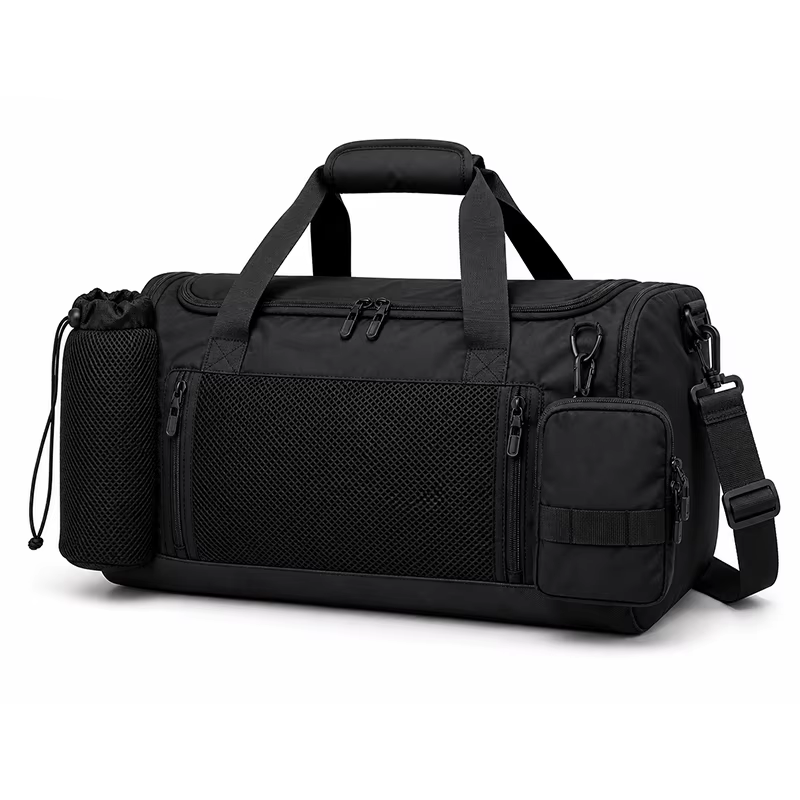
From the Factory Floor: A Wholesale Weekender Order That Worked
The buyer's first container order
A mid-size European retailer needed 800 units of a 35-litre weekender before the spring travel season. The procurement lead contacted a weekender bag China factory that had operated in Shenzhen for two decades and held BSCI and ISO 9001 audits. The first step was not price negotiation but a clear tech pack: dimensions, fabric weight, hardware grade, and a defined colourway. A weekender bag China factory that asks for a complete tech pack early tends to return fewer surprises at the pre-shipment stage. The buyer sent reference photos and a physical sample bought from a competitor, which the factory disassembled to measure zipper gauge and baseboard stiffness.
The development cycle ran six working days. A specialist at Shenzhen D-Jeesian Bags Co., Ltd. flagged that the original 420D fabric would scuff at the base within a few trips, and proposed a 600D Oxford with a PU backing. That single change protected the product's resale value. When the buyer compared quotes, the cheapest offer came from a trading company with no visible facility; the chosen weekender bag China factory offered a transparent walkthrough of its 5,000-square-metre plant and 200-plus workers.
Where the order nearly went wrong
Where the order nearly went wrong was at the lining stage. The first pre-production sample showed a coating that peeled under a 48-hour humidity test. A disciplined weekender bag China factory treats such a failure as a material-batch issue, not a one-off, and re-sources the laminate before cutting mass fabric. The buyer insisted on a second PPS confirmation, which caught a mismatched zipper colour. These are exactly the moments where working with a verified weekender bag China factory saves a shipment from costly returns. A second sample round added five days but prevented a container of defective lining from sailing.
For a category built on travel abuse, the base and handles deserve extra attention. A weekender bag China factory that reinforces the floor with an inserted EVA board keeps the silhouette upright on a hotel trolley. Buyers who photograph the approved sample from every angle create a reference that settles disputes later, because a worn bag in a complaint photo either matches the approved spec or it does not.
Material and Construction Principles Behind a Reliable Weekender
Fabric weight and coating choices
Fabric selection defines how a travel holdall ages. A 600D–900D polyester Oxford resists abrasion far better than lightweight 300D cloth, yet adds little weight at this size. A weekender bag China factory applying a PU or TPU coating controls water beading without making the panel stiff. TPU coating also survives cold-flex tests that crack older PVC films. The base panel deserves a separate denser weave or an inserted board so the bag keeps shape when set on wet terminals.
Substrate choice also drives cost and compliance. Recycled polyester blends appeal to Western retailers with sustainability targets, though they shift dye lots slightly between runs. A weekender bag China factory that documents the exact substrate per order lets a buyer keep colour consistent across seasons.
Stitch density and reinforcement
Stitch density and reinforcement separate a durable overnight tote from a seasonal throwaway. A standard of eight to ten stitches per inch on load-bearing seams prevents seam creep under 12 kg of contents. A weekender bag China factory that bartacks stress points—strap roots, handle junctions, and zipper ends—extends service life noticeably.
Webbing choice also counts. A 25 mm polypropylene strap holds form better than a thin polyester tape that curls after washing. A weekender bag China factory proposing a single padded laptop channel and one ventilated shoe pocket, then leaving the main cavity open, respects how travellers actually pack. Over-compartmentalised interiors waste volume and add failure seams at every partition, which is why restraint in design often outlasts cleverness.
What Standards and Audits Actually Tell Buyers
Social compliance and quality systems
Social compliance audits reveal whether a facility runs ethically and consistently. BSCI and ISO 9001 certificates indicate documented processes for traceability, corrective action, and worker welfare. A weekender bag China factory holding these signals a management system, not just a bench of sewing machines. Buyers should request the audit scope and validity date rather than accepting a logo on a website.
Documentation discipline is the quiet differentiator here. A weekender bag China factory that archives every lot's test record lets a buyer defend a product recall or a retailer audit years later. Request the test report number and the corresponding lot number on the packing list so the documents connect to the physical goods on the dock.
Material safety certifications
Material safety certifications matter for market access. REACH covers restricted substances in the EU; California Proposition 65 and CPSIA apply to US-bound goods, the latter specifically for items that might reach children. A responsible weekender bag China factory supplies SGS or independent test reports tied to the actual fabric lot, not a generic annual certificate. RoHS and CE markings suit bags with electronic components such as built-in power banks or LED tags. Shenzhen D-Jeesian Bags Co., Ltd. maintains SGS, CE, and RoHS documentation across its catalogue, which simplifies customs conversations and retailer onboarding alike.
Substance testing should follow the real use case. A weekender bag China factory serving export markets tests for phthalates and azo dyes on the actual coated fabric, because a clear result on one colourway does not cover a different dye batch. Buyers specifying multiple colourways should ask for per-colour reports or accept that the first production lot sets the baseline for the programme.
A Practical Sourcing Checklist for Buyers
Selection and inspection before you commit
Selecting the right factory starts with evidence, not brochures. Request a facility video, worker count, and at least two client references in a comparable market. A trustworthy weekender bag China factory answers MOQ, sampling time, and lead time without hedging. Typical MOQ runs 500–1,000 pieces per style; sample development takes five to seven working days; mass production spans twenty-five to thirty-five days after approval. Profiles such as the one at djxbag help confirm scale before a visit. Buyers comparing silhouettes can review large-capacity travel designs at product before finalising dimensions and base reinforcement.
Inspecting before shipment prevents the costliest errors. Commission a third-party QC at the finished-goods stage covering stitch density, zipper pull strength, coating adhesion, and odour. A weekender bag China factory accustomed to export QC expects this and provides a packing list with lot numbers. Keep the carton markings against the invoice so a missing carton is easy to trace through the forwarder.
Use and maintenance that preserve value
Using samples to validate protects the launch. Order a small paid sample set and run them through real travel: a flight, a rainy commute, a hotel floor. A weekender bag China factory that encourages field testing is confident in construction. The case studies and production notes on djxbag show how repeat buyers refine specs across seasons rather than relearning the same lessons.
Maintaining quality across reorders needs a living spec sheet. Lock the approved fabric lot, hardware model, and stitch standard into a purchase order so a weekender bag China factory cannot quietly substitute materials when the original weaver runs short. Schedule a mid-production check on the second and third orders, because consistency—not the first shipment—proves a partner. Shenzhen D-Jeesian Bags Co., Ltd. supports OEM/ODM programmes where the spec sheet travels with every repeat order and protects the buyer from silent changes that erode a hard-won reputation.
Frequently Asked Questions
What is the typical MOQ for a custom weekender?
Answer: Most Shenzhen factories set a minimum of 500 to 1,000 pieces per style for a custom weekender, since cutting and printing setup costs spread across larger runs. A weekender bag China factory may accept 300 pieces for a simple colour variation on an existing mould, but new hardware tooling usually resets the minimum. Buyers should confirm MOQ in writing before sampling, because quoted prices shift sharply below the threshold and surprise a first-time importer expecting flexible small batches.
How long does sample development take?
Answer: Sample development for a standard weekender typically runs five to seven working days once the tech pack is complete. A weekender bag China factory needs the dimensions, fabric, hardware grade, and artwork to build an accurate prototype. Complex structures with moulded bases or printed panels add a few days. Rush sampling is possible but risks skipping the humidity and pull tests that reveal weak laminates, so a realistic timeline protects the launch from defective mass production later in the season.
What is the mass production lead time?
Answer: After sample approval, mass production generally spans twenty-five to thirty-five days for a run of several thousand units. A weekender bag China factory schedules cutting, sewing, hardware fitting, and QC in sequence, and material sourcing often dominates the clock. Peak seasons before spring and autumn travel push timelines out, so buyers should place orders two months ahead. Confirming fabric availability at PO signing prevents the silent substitutions that extend delivery unexpectedly and miss a selling window.
Which certifications matter for Western markets?
Answer: For EU shelves, REACH and a BSCI or ISO 9001 audit cover substances and social compliance. US-bound goods may need CPSIA for child-adjacent items and California Proposition 65 warnings where applicable. A weekender bag China factory serving exports should supply SGS test reports tied to the actual lot. CE and RoHS apply when bags include electronics. Request validity dates and lot numbers so the paperwork matches the shipment at the border and satisfies a retailer's compliance team without delay.
How should a buyer verify a factory is real?
Answer: Verification starts with a live video call showing the production floor, worker count, and machinery, plus a recent audit certificate with a matching address. A weekender bag China factory confident in its facility shares references from comparable markets without hesitation. Third-party inspection at the finished-goods stage confirms output quality. Cross-check the domain, business licence, and export records, and avoid suppliers who refuse a factory visit or deflect every documentation request with vague replies.
What payment structure is normal for the first order?
Answer: A common structure is a 30 percent deposit to start cutting and a 70 percent balance against a pre-shipment inspection report or bill of lading copy. A weekender bag China factory may request full tooling upfront for bespoke hardware, refundable against the order. New buyers should avoid paying the full balance before QC clears the goods. Using a secure escrow or documented letter of credit reduces exposure on a first collaboration with an unproven supplier in a new market.