
 EN



Long-Haul Field Notes: One Travel Bag That Survived a Month on the Road
The brief from a touring musician
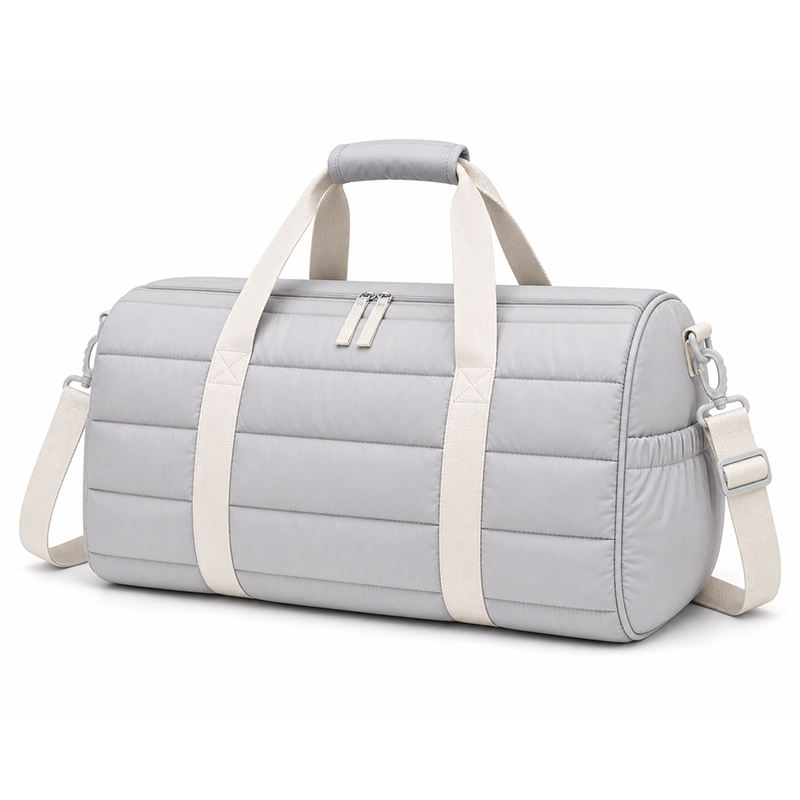
A touring musician needed a single bag for a 28-day, nine-city route across humid and dry climates. The request went to a personalized travel bag OEM partner in Shenzhen with two decades of export experience. The brief was deceptively simple: carry 14 kg of clothing and instruments without a checked case. The factory built a 40-litre soft-shell with a padded laptop channel and a separate ventilated compartment for sweaty stage clothes. A personalized travel bag OEM that asks how the bag will actually be carried—shoulder, hand, or trolley sleeve—designs the harness before the panel, not after.
The failure point nobody predicted
The first prototype returned with a flaw nobody predicted. Daily overload past 16 kg caused the top handle's single-row stitch to slip after day twelve. A personalized travel bag OEM treating this as a design lesson re-engineered the handle root with bartacks and a doubled webbing loop, then re-tested to 22 kg. The musician later reported the revised version survived a full tour with no deformation. Small field failures like this are precisely why real-use testing beats showroom inspection, and why a second sample round belongs in the budget before committing to a container.
For long trips the closure system matters as much as capacity. A personalized travel bag OEM that specifies a moulded, not stamped, zipper slider avoids the mid-trip jam that strands belongings at a hostel desk. Twin zipper pulls let the bag be locked through a luggage loop. These details feel minor until a traveller is late for a connection and fighting a reluctant zip, so the spec sheet should name the slider grade explicitly.
Engineering Features That Earn Their Place on Long Trips
Load distribution and harness geometry
Load distribution separates a comfortable custom travel holdall from a shoulder-killer. Wide, contoured straps spread pressure across the trapezius instead of cutting one point. A personalized travel bag OEM that adds a sternum strap and a pass-through trolley sleeve recognises that most long trips mix walking with airport wheels. The base deserves an inserted EVA or PE board so the bag stands upright and protects contents from ground moisture. A well-balanced design also keeps the centre of gravity low, which reduces the swinging that fatigues a shoulder over a full day of transit. A personalized travel bag OEM that prototypes the harness on a test rig, rather than by eye, catches pressure points before the first shipment and protects the traveller from a sore shoulder on day one.
Fabric systems for changing climates
Fabric systems must handle changing climates. A 600D–900D polyester Oxford with a TPU coating sheds rain yet stays flexible in cold terminals. A personalized travel bag OEM specifying breathable mesh on the back panel reduces the damp cling of a humid commute. Lining around 190T ripstop resists snags from chargers and cables. Hardware grade matters: a moulded slider and a YKK-class zip outlast cheap stamped parts by years of daily use. A personalized travel bag OEM offering recycled polyester blends helps a brand meet sustainability targets, though dye lots shift slightly between runs and the spec sheet should record the exact substrate. Shenzhen D-Jeesian Bags Co., Ltd. operates a 5,000-square-metre facility with 200-plus craftsmen, which lets a programme keep substrate and hardware consistent across repeat orders.
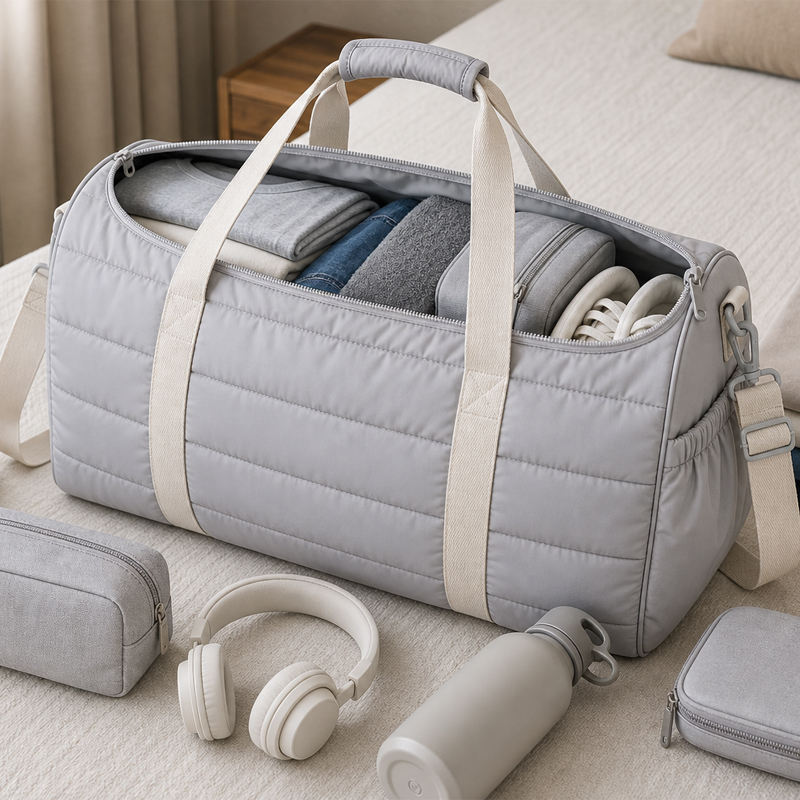
Pockets should earn their place rather than multiply for the catalogue. One padded electronics channel, one ventilated shoe or laundry pocket, and a quick-access top pocket cover most long trips. A personalized travel bag OEM that proposes a clean interior with adjustable dividers gives the traveller control without dead weight. Over-compartmentalised bags waste volume and add failure seams at every partition, so restraint in design usually outlasts cleverness on the road.
Compliance and Third-Party Proof Points Buyers Can Trust
Audit frameworks behind a credible partner
Audit frameworks reveal whether a partner runs a system or a workshop. BSCI and ISO 9001 certificates signal documented traceability, corrective action, and worker welfare. A personalized travel bag OEM holding these can show an audit scope and validity date rather than a recycled logo. Buyers should request the audit and the substance report together, since one without the other leaves a compliance gap that a retailer's team will flag at onboarding.
Substance testing for export markets
Substance testing governs market access. REACH covers restricted chemicals for the EU; CPSIA applies to US goods that might reach children, and California Proposition 65 demands warnings where thresholds are exceeded. A responsible personalized travel bag OEM supplies SGS or independent lab reports tied to the actual fabric lot, not a generic annual certificate. CE and RoHS enter the picture when a bag carries electronics such as a built-in charger or LED tag. Request the report number and match it to the lot on the packing list so the documents connect to the physical goods on the dock.
A Feature-by-Feature Buyer's Framework
Selection starts with trip length and mode. A weekend route needs a 30-litre soft weekender; a month abroad wants 40 litres with a harness. A personalized travel bag OEM should translate the use case into fabric weight, reinforcement, and pocket count before quoting. Typical MOQ runs 500–1,000 pieces per style, sample development takes five to seven working days, and mass production spans twenty-five to thirty-five days after approval. Profiles such as the one at djxbag confirm scale before commitment.
Inspection at the finished-goods stage should measure stitch density, zipper pull strength, coating adhesion, and odour. A personalized travel bag OEM accustomed to export QC provides a lot-numbered packing list and welcomes a third-party check. Photograph carton markings against the invoice so a missing carton is traceable through the forwarder. Test one production unit to the same 22 kg load the prototype survived, because a passed sample means little if the mass run drifts from the approved spec.
A personalized travel bag OEM that shares a clear costing sheet early also shortens the negotiation, because the buyer sees fabric, hardware, and labour as line items rather than a single opaque figure. A personalized travel bag OEM with a named account manager gives the importer one contact across sampling, production, and after-sales, which matters more on a second reorder than any launch discount. A personalized travel bag OEM that keeps per-lot test reports, not one annual certificate, lets a buyer answer a retailer's audit without a scramble, and that readiness often decides whether a purchase order is confirmed.
Use and maintenance that preserve value
Use and packing decide real-world life. Break in a new custom travel carrier with a short trip before the long haul, and pack heavy items low and centred to protect the base. A personalized travel bag OEM that supplies a care card extends product life and reduces returns. Roll clothing to limit creasing and keep the structured channels clear so the bag holds its shape in overhead bins. A personalized travel bag OEM that prints a short care routine on a card also lowers return rates, because travellers follow guidance instead of guessing how to clean coated panels. Shenzhen D-Jeesian Bags Co., Ltd. ties the spec to repeat orders, and its production notes on news show how buyers refine features across seasons without losing consistency. For a made-to-spec travel bag, the gym and travel crossover model at sports bags demonstrates the reinforced base and wet-dry split that long trips demand.
Frequently Asked Questions
Which features matter most for long trips?
Answer: Prioritise a wide contoured strap, a trolley sleeve, a reinforced base board, and a moulded zipper slider over decorative pockets. A personalized travel bag OEM should design the harness before the panel so weight sits on the shoulder comfortably. A ventilated laundry pocket and one padded electronics channel cover most needs. Fabric around 600D–900D Oxford with TPU coating handles rain and cold. Skip over-compartmentalised interiors that waste volume and add seams that eventually fail under daily load.
How should a buyer brief the factory?
Answer: Send a tech pack with dimensions, target weight, fabric, hardware grade, and artwork, plus a reference photo or sample. A personalized travel bag OEM uses the pack to build a prototype in five to seven working days. Explain how the bag will be carried—hand, shoulder, or trolley—because that drives strap and reinforcement choices. Clarify the trip length and climate so fabric and lining selections match real use rather than a showroom assumption that fails on the road.
How many pockets are ideal?
Answer: Three functional zones usually suffice: a padded electronics channel, a ventilated shoe or laundry pocket, and a quick-access top pocket. A personalized travel bag OEM that proposes adjustable dividers beats a bag with a partition for everything, since excess compartments waste capacity and create more failure seams. Travellers value open main volume for clothing rolls. Resist catalogue pressure to add pockets that look useful but rarely get used on a month-long route.
Which certifications do EU and US buyers need?
Answer: EU shelves need REACH compliance and preferably a BSCI or ISO 9001 audit for social and quality systems. US-bound goods may require CPSIA for child-adjacent items and California Proposition 65 warnings where thresholds are exceeded. A personalized travel bag OEM should supply SGS reports tied to the actual lot, not a generic certificate. CE and RoHS apply when electronics are integrated. Always request validity dates and lot numbers that match the shipped goods.
How much does a custom sample cost?
Answer: Sample cost varies with structure, but a standard personalized travel bag OEM typically charges a development fee in the low tens of dollars, often refunded against the first bulk order. Complex moulded bases or printed panels add cost. The five-to-seven-day sampling window excludes shipping. Buyers should pay for a realistic prototype rather than a simplified one, because a stripped sample hides weaknesses that surface only in mass production and long-trip use.
How is consistency kept across reorders?
Answer: Consistency comes from a locked spec sheet covering fabric lot, hardware model, and stitch standard attached to every purchase order. A personalized travel bag OEM cannot then substitute materials silently when a weaver runs short. Schedule a mid-production inspection on the second and third orders, since the first shipment proves little. Shenzhen D-Jeesian Bags Co., Ltd. keeps the approved spec with repeat runs, protecting buyers from drift in colour, weight, and construction over time.