
 EN



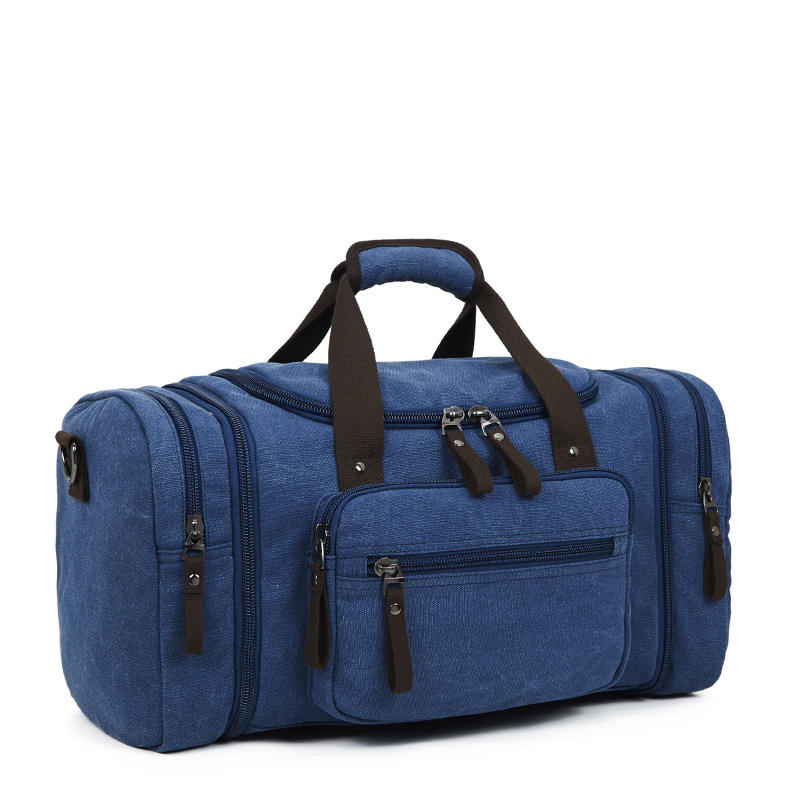
Strategic Advantages of Wholesale Custom Duffle Bags for Organizations
Beyond Branding: How Customization Drives Operational Efficiency and Asset Longevity
Custom duffle bags do more than reinforce brand visibility—they function as operational assets. When organizations procure wholesale custom duffle bags, they gain a standardized packing system that cuts preparation time, minimizes gear loss, and simplifies logistics. Buyers can specify durable construction features—reinforced handles, water-resistant bases, high-density zippers, and internal mesh pockets—that directly extend product life and reduce repair frequency. Uniform sizing streamlines storage, transport, and inventory tracking, while consistent materials and assembly allow procurement teams to forecast wear with greater accuracy. Early failures in generic bags trigger hidden costs: lost productivity, emergency reorders, and inconsistent branding across teams or events. By controlling specifications upfront, organizations mitigate these risks before deployment. Over a three-year lifecycle, the resulting gains in predictability, reduced churn, and extended asset longevity often outweigh the initial price premium—transforming a simple bag into a scalable, long-term operational tool.
Case Evidence: University Athletics Program Reduces Replacement Costs by 37% with Embroidered Wholesale Custom Duffle Bags
A university athletics program replaced generic stock duffle bags with embroidered wholesale custom versions across all varsity and junior teams. Over two competitive seasons (2023–2024), replacement purchases dropped by 37%. The program attributed this improvement to two interrelated factors: first, embroidery resisted peeling and fading far better than screen-printed logos on stock bags—preserving both appearance and usability; second, athletes treated personalized team bags as owned equipment, reducing loss rates and increasing care. Equipment managers also reported faster identification and reconciliation of gear after road trips, thanks to consistent logo placement and design. Standardizing across teams simplified inventory management and enabled bulk purchasing leverage. These outcomes demonstrate how thoughtful customization lowers total cost of ownership—not just cosmetic enhancement—delivering measurable budget stability and operational clarity for large-scale programs.
Bulk Procurement Realities: MOQ, Lead Time, and Unit Economics
MOQ Evolution: How Supplier Flexibility Has Lowered Entry Barriers for Wholesale Custom Duffle Bags
Minimum order quantity (MOQ) requirements for wholesale custom duffle bags have significantly declined over the past decade. Where custom runs once demanded 1,000+ units, many reputable suppliers now accept orders as low as 50–200 units—with lead times averaging 20–30 days . This shift reflects advances in digital pattern cutting, modular trim libraries, and on-demand embroidery technology. While low-MOQ orders carry a 15–25% unit cost premium—due to fixed setup and sampling overhead—they enable strategic flexibility: procurement teams can pilot designs, validate internal demand, and scale production without locking up working capital. Some manufacturers even reserve off-peak capacity for repeat low-MOQ clients, reinforcing reliability. Savvy buyers no longer treat MOQ as a rigid threshold but as a negotiable variable—shaped by fabric availability, production scheduling, and long-term partnership potential.
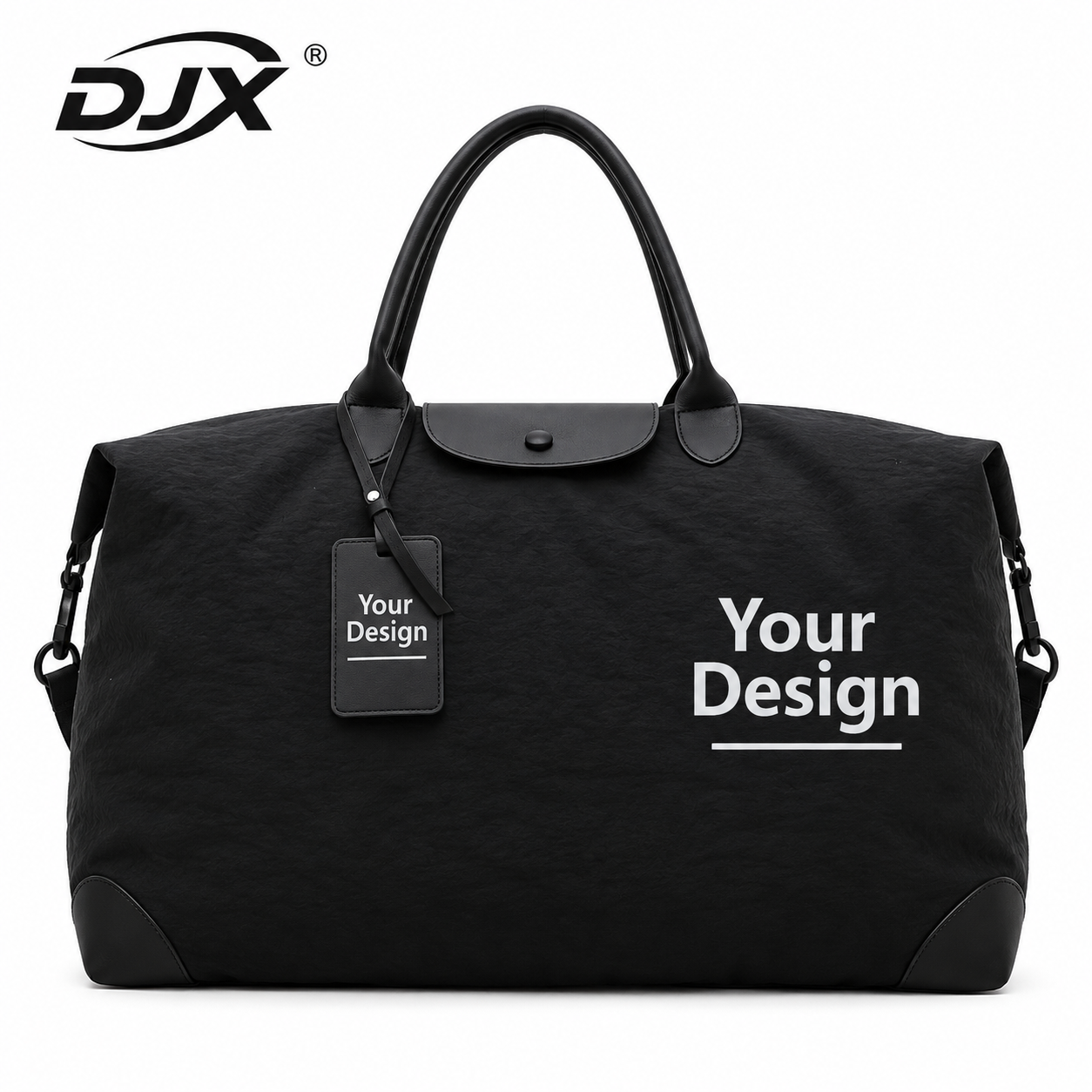
Volume Threshold Logic: Why 500+ Units Justify Customization—While Smaller Batches Favor Stock
At 500+ units, customization becomes economically rational. Setup, digitization, and decoration fees amortize quickly, delivering per-unit cost reductions of 10–20% compared to smaller batches (2024). Larger orders may also qualify for expedited 7–12 day lead times when capacity is reserved in advance. In contrast, orders under 200 units rarely offset customization expenses—stock bags remain the pragmatic choice for immediate fulfillment and minimal overhead. The inflection point lies in balancing cash flow and control: stable, recurring demand justifies custom investment; one-off events or exploratory pilots favor stock. For example, a 300-unit order typically leans toward stock unless repeat volume is confirmed within six months. This threshold logic preserves brand integrity where volume supports it—without exposing working capital to unnecessary risk.
True Cost Comparison: Setup Fees, Unit Pricing, and Lifetime Value
The Re-Order Churn Factor: Why $3.80 Stock vs $5.20 Custom Isn’t the Full Story
Unit price alone misrepresents true cost. A $3.80 stock duffle bag may appear economical—but if it fails after six months, annual acquisition costs double, and hidden expenses mount: freight surcharges, administrative labor, and inconsistent branding from mismatched replacements. By comparison, a $5.20 wholesale custom duffle bag—built with reinforced stitching, abrasion-resistant zippers, and high-denier fabric—typically lasts 18–24 months. That reduces annual replacements to one or fewer per user. Setup fees ($150–$500) add only $0.15–$0.50 per unit at 1,000 pieces. Over two years, the stock option may cost $7.60–$11.40 per user, while the custom version remains near $5.20–$5.70. More critically, reorder churn erodes brand cohesion and operational rhythm. Decision-makers should prioritize lifetime value—not sticker price—when evaluating bulk procurement options.
Branding That Endures: Durability-Integrated Customization Options
For wholesale custom duffle bags, decoration method is not purely aesthetic—it determines whether a logo survives daily handling, abrasion, laundering, and repeated folding.
Embroidery vs Screen Printing: Matching Method to Use Case and Organizational Identity
Embroidery stitches thread directly into the fabric, producing a raised, tactile mark that resists cracking, fading, and wear on canvas or high-denier nylon. It excels for small logos, team initials, or institutional names requiring legibility through active, long-term use. Screen printing applies ink to the surface—ideal for full-color graphics and large-area visuals at lower per-unit cost—but ink layers can degrade under flexing or abrasion, especially on softer or highly used panels.
| Factor | Embroidery | Screen Printing |
|---|---|---|
| Durability | High—thread resists abrasion and cleaning | Moderate—ink may crack with repeated flexing |
| Design detail | Best for small text, borders, structured fabrics | Best for full-color visuals and large print areas |
| Cost at scale | Higher unit cost, lower replacement risk | Lower unit cost, may require reorder sooner |
Choose embroidery for mission-critical identity—such as athletic programs, corporate field teams, or government agencies—where durability and consistency are non-negotiable. Reserve screen printing for time-bound campaigns, short-run events, or promotional initiatives where visual impact matters more than multi-year resilience.
FAQ Section
What are the advantages of using wholesale custom duffle bags?
Custom duffle bags offer standardized packing, durable construction, and brand reinforcement while reducing operational costs, gear loss, and storage inefficiencies.
How do wholesale custom duffle bags improve asset longevity?
By incorporating reinforced handles, water-resistant bases, and high-density zippers, they resist wear and tear, reducing frequent replacements and repair needs.
What is MOQ, and how does it impact custom duffle bag orders?
MOQ stands for Minimum Order Quantity. Advances in technology have reduced MOQs to as low as 50–200 units, enabling organizations to test designs and scale production efficiently.
Is it cost-effective to choose custom duffle bags over stock options?
Yes, custom duffle bags, while initially more expensive, reduce long-term costs by extending the lifecycle of products and minimizing reorders.
Which method is better: embroidery or screen printing?
Embroidery is durable and ideal for small logos, while screen printing is more cost-effective for large or colorful designs but less durable over time.
Table of Contents
- Strategic Advantages of Wholesale Custom Duffle Bags for Organizations
- Bulk Procurement Realities: MOQ, Lead Time, and Unit Economics
- True Cost Comparison: Setup Fees, Unit Pricing, and Lifetime Value
- Branding That Endures: Durability-Integrated Customization Options
-
FAQ Section
- What are the advantages of using wholesale custom duffle bags?
- How do wholesale custom duffle bags improve asset longevity?
- What is MOQ, and how does it impact custom duffle bag orders?
- Is it cost-effective to choose custom duffle bags over stock options?
- Which method is better: embroidery or screen printing?