
 EN



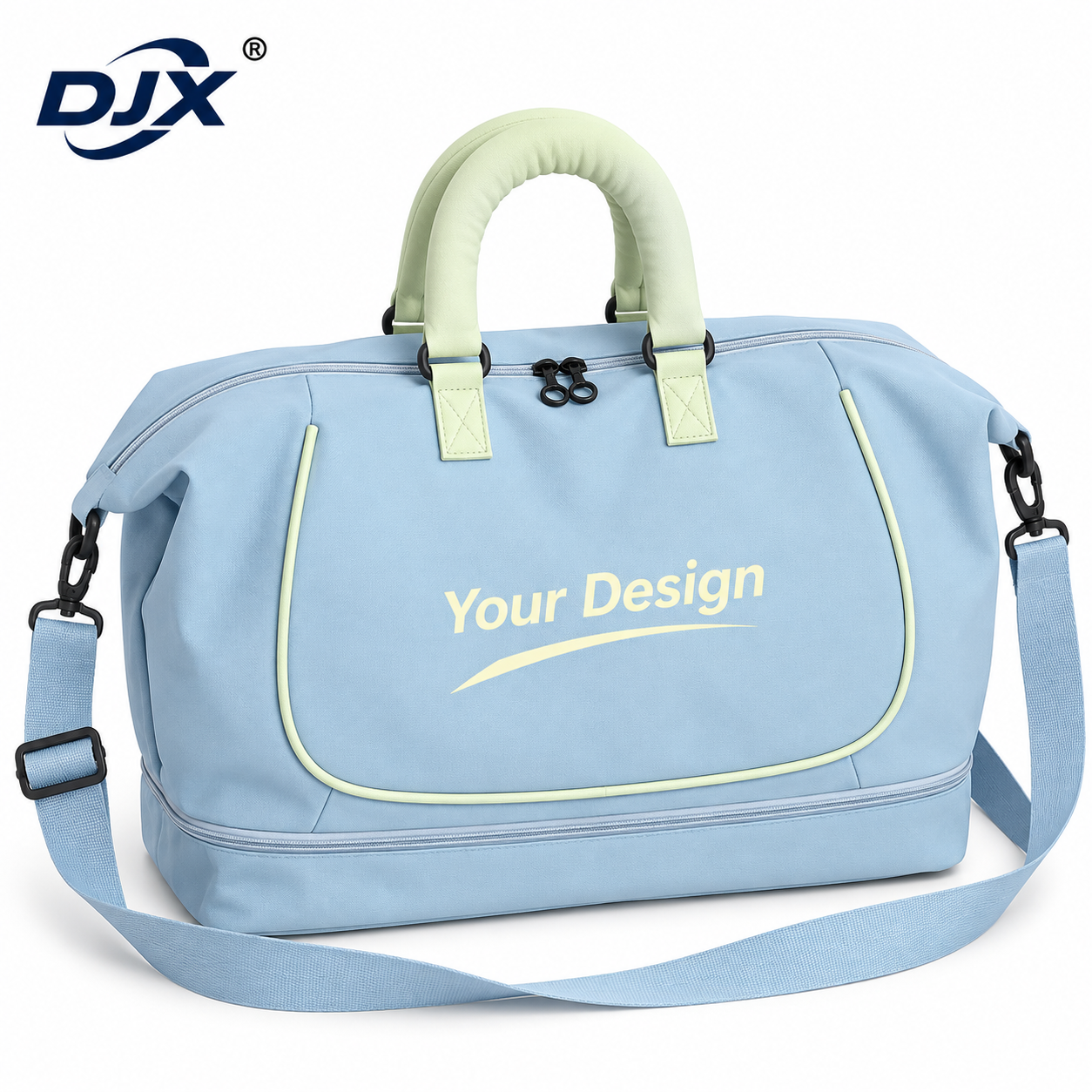
Material & Color Customization: Build Your Bag’s Foundation
Premium Fabric Options: Nylon, Polyester, Canvas, and Sustainable Eco-Materials
Fabric choice directly impacts performance, durability, and brand alignment. Reputable custom duffle bag manufacturers typically offer four core material families—each with distinct functional strengths.
Nylon delivers high tear strength, low weight, and inherent water resistance—making it ideal for gym, travel, and high-mobility use. Polyester excels in colorfastness and abrasion resistance, holding screen-printed logos with exceptional clarity. Canvas offers a rugged, heritage aesthetic that softens with age but carries more weight. Sustainable options—including recycled PET and organic cotton blends—support circular production goals and resonate strongly with eco-conscious buyers.
Performance and cost scale with denier (e.g., 600D polyester balances durability and value for promotional kits; 1000D nylon suits heavy-duty applications). Many suppliers enhance functionality with coatings or backing layers for improved water repellency and shape retention. Recycled fabrics may qualify for the Global Recycled Standard (GRS), enabling verifiable sustainability claims. Always request physical fabric swatches before finalizing—visual and tactile evaluation is essential for accurate expectations.
Precise Color Matching with Pantone® Integration Across Fabrics and Trims
Color consistency is mission-critical—and where many custom projects falter. Pantone® integration ensures precise, repeatable color across body panels, zipper tape, piping, and lining. Generic descriptors like “navy” or “forest green” introduce ambiguity; a Pantone reference eliminates it.
Because dye absorption varies by fiber and weave, a trusted manufacturer will produce lab dips on your exact chosen fabric. The same Pantone shade can appear lighter on canvas and deeper on nylon due to differences in reflectivity and surface texture. Digital proofs are helpful for early review, but physical swatches—evaluated under multiple lighting conditions—are the gold standard for approval.
Suppliers can match trims to the main panel using a single Pantone reference across materials, ensuring cohesion across retail displays, team kits, or corporate gifting. Secure an approved physical color swatch before bulk production to avoid costly re-dyeing or mismatched components.
Branding & Personalization: Elevate Recognition and Identity
Custom branding transforms a functional duffle into a strategic brand asset. A seasoned manufacturer aligns imprint method, placement, and material selection with your brand guidelines—ensuring consistency across retail, travel, and corporate touchpoints.
Imprint Method Comparison: Screen Printing, Embroidery, and Heat Transfer
The right imprint method balances aesthetics, longevity, and application context:
- Screen printing delivers vibrant, Pantone-matched results on smooth fabrics like nylon and polyester. It’s cost-efficient for large runs—but each added color requires a separate screen setup.
- Embroidery conveys premium quality and exceptional durability, especially on canvas or heavyweight textiles. It holds up well through repeated washing and abrasion, though fine text or intricate detail may lose definition.
- Heat transfer handles photographic artwork, gradients, and multi-color complexity with a smooth, seamless finish—ideal for small text or detailed graphics. However, repeated flexing or exposure to high heat can cause cracking over time.
Your manufacturer should advise based on fabric type, logo complexity, color count, order volume, and expected use. For bags subjected to frequent folding or compression—like carry-ons or gym duffles—embroidery or screen printing typically outperform heat transfer in long-term wear. Always test your logo on an actual fabric swatch before production.
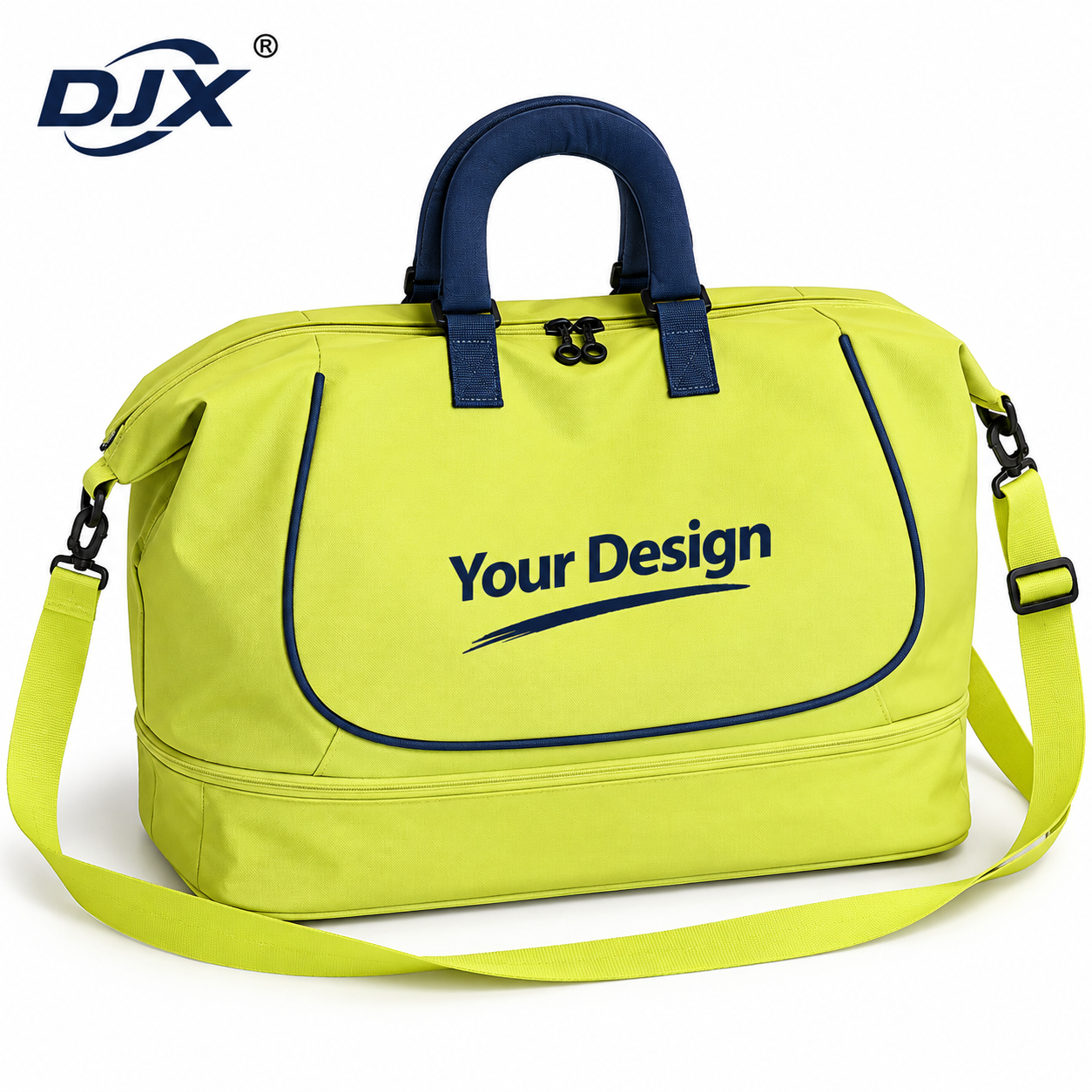
Monogramming, Custom Woven Tags, and Strategic Logo Placement Guidelines
Monogramming adds refined personalization—commonly applied to side panels or top handles for individualized gifting or VIP programs. Custom woven tags provide subtle, high-end brand reinforcement inside the bag or along interior seams.
Strategic placement maximizes visibility while preserving design integrity:
- Primary logo: Front panel or end cap (highest-impact real estate)
- Secondary marks: Straps, zipper pulls, or base corners
- Clear space: Maintain consistent buffer zones around all logos to prevent visual clutter
- Avoid low-contrast embroidery on stretch mesh, and ensure access points (e.g., side zippers, expandable gussets) don’t distort imprints
A knowledgeable manufacturer will recommend monogram sizing that balances legibility with resilience—large enough to remain readable after cleaning and abrasion, yet proportionate to the panel.
Structural Design & Capacity: Optimize Form for Function
Structure must serve purpose—not just appearance. A skilled custom duffle bag manufacturer designs around real-world carry demands: weekend trips call for 30–40 L capacity; team gear or extended travel often requires 60–90 L with reinforced load-bearing points.
Shape optimization—through side panel taper, base curvature, and lid opening width—reduces dead space and improves pack efficiency. Seam placement, gusset depth, and optional rigid bottom boards distribute stress across high-wear zones without adding unnecessary weight. According to 2024 travel goods buyer surveys, 74% ranked usable interior capacity as their top structural priority—underscoring the need to specify volume by functional fill, not external dimensions alone.
A 24-inch duffle with squared ends typically holds 15–20% more than a tapered barrel of identical length. Refinements like internal divider height, end pocket depth, and U-shaped openings further optimize usable space. Structured bases improve upright stability; wide openings accelerate packing. Request a schematic or physical sample that maps internal dimensions, weight limits, and load-bearing stitching before production.
Functional Enhancements: Performance-Driven Features for Real-World Use
Functional upgrades transform a generic duffle into purpose-built gear—reducing friction in daily use and protecting contents during transit.
Smart Compartmentalization: Dry/Wet Separation, Shoe Pockets, and Secure Zipped Dividers
Intelligent organization solves real problems:
- A dry/wet separation panel isolates damp towels or swimwear from electronics and apparel.
- Dedicated shoe pockets contain odor and dirt, preventing cross-contamination.
- Secure zipped dividers maintain internal structure—keeping accessories accessible and delicate items protected from shifting.
These features support gym, travel, and outdoor use—cutting rummaging time and simplifying post-trip unpacking and cleaning. Removable dividers offer flexibility; reinforced mesh pockets add breathability and visibility. Your manufacturer can tailor pocket depth, divider height, and zipper placement to match user behavior—such as how athletes pack gear or how business travelers organize tech.
Durability Upgrades: Reinforced Bases, Padded Ergonomic Straps, and Weather-Resistant Zippers
Durability begins where stress concentrates:
- Reinforced bases resist scuffing on rough floors and uneven surfaces.
- Padded ergonomic straps—especially those with memory foam—distribute weight evenly, reducing shoulder fatigue during extended carries.
- Weather-resistant zippers (e.g., YKK AquaGuard®) block moisture, dust, and debris from entering the main compartment.
Critical construction details include double-stitched high-stress seams and bar-tacked strap anchors—proven to extend product life and reduce warranty claims. Optional enhancements include non-slip base feet and durable water-repellent (DWR) coatings. Coated zipper tape prevents corrosion in humid environments. Always test prototypes under realistic load conditions to verify zipper smoothness, strap comfort, and overall structural integrity before full production.
FAQ Section
What fabric options are best for custom duffle bags?
Common options include nylon for water resistance, polyester for enhanced colorfastness, canvas for a rugged aesthetic, and sustainable materials like recycled PET or organic cotton blends.
Why is Pantone® integration critical for color consistency?
Pantone® integration ensures precise color matching across materials, trims, and fabrics, eliminating ambiguity in color descriptors.
What imprint methods are available for branding custom duffle bags?
Screen printing, embroidery, and heat transfer are common methods. Each option balances aesthetics, durability, and context of use.
How can I optimize my duffle bag's internal design?
Features like dry/wet separation panels, shoe pockets, and secure zipped dividers improve usability and organization during travel or gym use.
What durability enhancements should I consider?
Reinforced bases, padded ergonomic straps, weather-resistant zippers, and double-stitched seams significantly extend product life.